
Arghawan

Gita Mahasti Payda

Arghawan, Arghawan… wake up.

You’ve missed your morning prayer.

I open my eyes to my mother’s voice.
Her harsh coughing had finally eased last night,
and for the first time in three years,
I slept peacefully.

Cold water on my face wakes me up as I make ablution.
After praying, I go to the storage room and pull out the long black dress from the box.
I grab my black scarf and mask.

My fingers sting — blisters run across the middle joints of my right hand,
and two fingers on my left hand are still raw from fresh burns.

In the mirror, I see myself — my past self.
The girl with the colorful scarf,
two tiny white and green clips holding back half-open hair resting on her shoulders.
Long nails painted white.

I wrap the black scarf tightly around my head and pull it down to my eyebrows.
My eyes fall on the box of high-heeled boots I hid away three years ago.
I slip on my plain black boots instead.

Khahar-jani, bring that cotton candy again — the rose-flavored one!

Armaghan shouts after him:
“No, bring the white one! Not the pink, the white!”

Mother waves at me from behind the window.

I walk through the third alley of Sarai-e-Shomali toward Qala-e-Najjarha
and ring the bell at house number 6 in the second alley.

Zarghona opens the door and shoots me a sharp look for being a few minutes late.
I follow her down to the basement.

Ignoring the stares and whispers,
I head straight to the table.
The iron is already hot.

Zarghona raises her voice:
“Ladies, turn off your machines for a moment.
The director is coming.”

Mohammad Ayan walks in with his usual polite smile,
greeting everyone.

“My sisters, from today onward,
another colleague will join Sister Zarghona in managing the women’s department,
organizing schedules, processing salaries,
approving urgent leave, and overseeing new sewing projects.”

“And it’s best that this person is chosen from among you.”

The women’s eyes shift from him to each other.

Miss Arghawan, Bachelor of Economics, Kabul University.

His voice echoes in my ears.
My head lifts on its own.
My back straightens.
My shoulders rise.

I see my father in front of me wearing white,
smiling just like the day the results of the 2017 university entrance exam were announced.

“The taste of success.”

The women murmur wah and ah.
Excitement and anxiety shake my hands.

I grab my handbag and walk past their stares
with my head held high.

On the third floor, Mohammad Ayan opens a door.
The room is spacious and tidy,
with a sofa,
a large cabinet full of colorful files,
and several mannequins dressed in the workshop’s designs.

“This workshop’s door isn’t just an entrance —
it’s the livelihood of thirty women,
each one the head of her household,
just like you.”

The scent of cardamom fills the room.

“They may come for inspection.
Starting next Saturday,
I’ll wear traditional clothes and a turban,
and I won’t shave my beard anymore.”

After he leaves,
the feeling of my old office life washes over me.

I run my hand across the large wooden desk,
the computer,
the files.

I pick up the pen,
sit in the chair,
and tap the pen lightly on the table.

Sunday… where was I three years ago?

Sweat gathers on my forehead.
My throat dries.

At lunchtime,
I hesitantly told Zarghona I wanted to speak with the director.

“I know it hasn’t been a month since I started,
but… I need money.”

My father was a military commander in Kapisa.
He was martyred before the fall.

My older brother was a guard at the Continental Hotel.
He was killed in the attack.

“Now I live with my mother,
my younger sister,
and my little brother.”

“I was a project manager for women’s empowerment programs
at the Afghan Women’s Support Institute,
in partnership with the UK.”

“So you know how to write project proposals?”

“Very well.”

“I’ve been needing someone like you.”

The pen slips from my hand.
I open my eyes.

I open a new document on the computer
and begin drafting the full proposal.

A furious voice erupts from the hallway:

“Where are they? Search everywhere!”

Before I can step out,
the office door bursts open.
A tall man with a turban and henna-dyed beard storms in,
followed by armed men.

“`
Under the Silent Roof

Nabila Saeedi

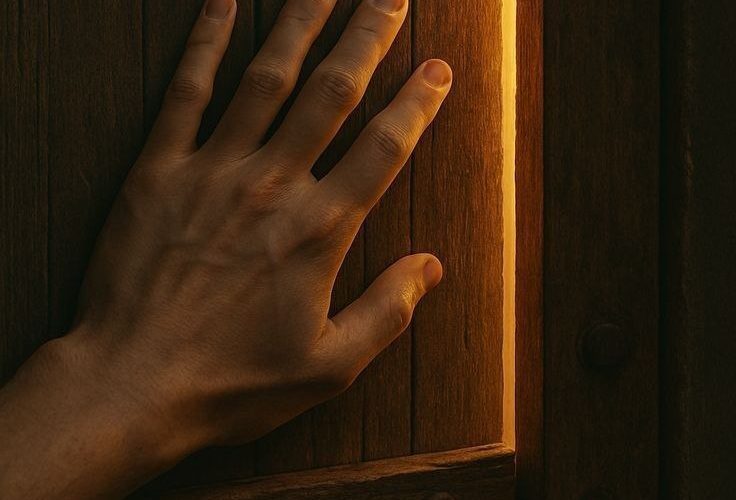
I wanted to walk up to the door and knock, but there was no one left behind it to open it anymore. The seven colored flowers in the garden had withered, the tall cypress trees no longer stood at the gate to cast their shade, and from inside the classrooms there was no sound of chairs scraping or desks being arranged. The teachers who used to scold the playful girls were gone too. The space was empty of the students who once sang with such excitement every single day.
From atop the crumbling walls, I looked into the deserted schoolyard. The wind twisted through the emptiness. My eyes followed the dusty, abandoned steps leading to the classrooms. Tears gathered in my eyes as I turned back toward home. I stared at the tiny stones sinking deeper into the dirt beneath my feet. Even passing by the spring near the shrine no longer felt the way it used to. I looked at everything with a tired, distant gaze. I didn’t even want anyone to greet me.
At the gate of our house, Nilab — the neighbor’s daughter — hurried toward me, smiling. She said, “Sahar, I brought my math book so you can teach me.” Her home wasn’t a suitable place for lessons, and I wanted children her age to keep learning.
That evening, I went to my aunt Laila’s house.
Aunt Laila lived with her husband and her son. Her husband was blind, and her son, Fardin, went to university every day and returned in the evening. People didn’t visit my aunt much, and she rarely left the house because she had to care for her husband. Her home felt like a safe place — somewhere we didn’t have to fear bad things happening.
My aunt agreed to let me use the basement of her old, half abandoned house as a classroom.
The basement had clean air and smelled of damp earth. The floor was firm and even, though the ceiling and walls were cracked in places. But since we didn’t want the authorities to find out, it was the best place we had.
I told Nilab to gather her friends and bring them to our little class the next day.
On the first day, only Nilab and two of her classmates — the ones who hadn’t been able to return to school — came with me. When I say “those left behind from school,” it feels like someone is driving a steel dagger into my heart, pulling it back a little, then stabbing even harder. There were only a few years between me and my students, and I myself was one of those “left behind.” That fear — the fear of our secret class being discovered — never left me.
My mother strongly opposed me teaching under such conditions. She said, “Your father isn’t here, your brother has left the country, and Maryam is still so young. If the Taliban take you, where am I supposed to look for you?”
After a while, to calm my mother, I could think of no solution except to close the class. The next day, at the end of the lesson, I told the girls that class would be closed for a week.
The days passed like years. Loneliness and regret clung to me. One day, a small boy came to our door and handed me a letter.
I opened it. It said:
“If you are not here, we will disappear again.”
At night, that sentence echoed in my mind: “If you are not here, we will disappear again.”
In my dreams, I saw myself explaining lessons on the board. But when I woke up, there was no class — not even a trace of it.
I couldn’t bear it anymore. I reopened the class. The girls were full of excitement, chatting happily as they reunited. I told them we had to be more careful this time. One girl from the back row called out, “If our voices shorten the life of this class, we’ll speak very softly — just please stay, teacher.”
One day, while we were solving math problems, someone pounded hard on the door. Silence swallowed the room. A fear I had never felt before washed over me. The girls’ eyes were wide, their breathing fast. We all looked at one another. I told them, “Stay calm. God willing, it’s nothing serious.” I walked slowly toward the door. Before I reached it, another loud knock shook the room.
With my heart in my throat, I opened the door — and it was Aunt Laila returning from the market. Breathless, she said, “Sahar, my girl, a fat man with long hair and a long beard passed me in the alley. As I walked by, I heard him on the phone saying, ‘I found the secret class. You all get here within half an hour.’ Then he hung up.”
I quickly prepared the girls to leave one by one. We rolled up their notebooks and tucked them inside their collars under their scarves, securing them with pen cases. Each girl slipped away toward her home, a few minutes apart.
At night, I dreamed again of the class — someone knocking, the girls crying, all of us terrified.
One summer afternoon, I was standing by the spring near our house. The village women were washing clothes, and children splashed in the water nearby. My mind was still in that basement when someone gently tapped my arm. I looked up, tired and distracted, and saw Nilab — neat, energetic, smiling as always. I pulled her into a tight embrace, and my tears soaked her scarf.
She said, “Teacher, my mother agreed. You can hold the class in our house. Will you come?”