Don’t touch me – I’ll tell my father!

Sapida Gulshan

It was the middle of summer, and I was still just a little girl.

My messy hair stuck out from under my headscarf, and the part that was supposed to sit under my chin had somehow slid halfway up my head.
Covered in dust, exhausted from the blazing Helmand sun, I dragged myself home from school.
Every step felt like a small struggle, every breath thick with heat and thirst.

I stepped inside and, without even taking off my shoes, called out:

“Mom, what did you cook?
I’m starving!”

From the kitchen, over the clatter of pots, she answered:

“Change your clothes first, then go buy some ice from the shop.
Lunch will be ready by then.”

I frowned, kicked my shoes off to the side, and muttered:

“But I’m so hot… can’t someone else go?”

“No,” she said firmly.
“Hurry, before it gets late.”

I was young, but I remember every detail of that day clearly.
My memory has always been sharp, and that afternoon is etched in my mind like a photograph.

I changed into a dress made from the fabric we called kashi yellow with red flowers.
I wasn’t old enough yet for my body to show any signs of womanhood, but I still wrapped a small scarf around myself, trying to cover up as much as I could.

When I stepped outside, the neighborhood was silent.
At that time of year, the heat kept everyone indoors.
With the constant power outages, people relied on shops for blocks of ice to keep their water cool.

I walked slowly toward the main road.
Still no one in sight.
A strange, nameless worry crept into my chest.

I passed the shop where we usually bought things.
The shopkeeper was a young man.
I didn’t go in — he didn’t sell ice — but I felt his eyes on me.
My heart began to pound.

I kept walking until I reached another shop farther down.
I bought the ice and headed back.

As I passed the first shop again, I heard a voice:

“Hey!”

I looked around.
No one.
Then I realized he meant me.
He motioned for me to come closer.
Without thinking, I walked toward him with my small, hesitant steps.

He greeted me with a smile — one that felt forced — and began asking questions:

“What did you buy from here yesterday?
How much change did I give you?
Did I owe you anything?”

I assumed he had made a mistake in his calculations.
I tried to explain:

“Y-yesterday… I… bought… s-soap…”

My words came out broken, my stutter making it hard to speak.

As I answered, he moved around the shop, pretending to tidy things.
I turned slightly to give him space, still trying to explain.

Then something happened — something that made my whole body freeze.

At first, I told myself it must have been accidental.
But it wasn’t.
It happened again.
And again.

By the time I finished answering his questions, I just wanted to leave.
He crouched down so his face was level with mine, sweat dripping down his cheeks, and with a strange pause, he said something I never expected:

“Will you give me a kiss?”

A shock ran through me.
In that moment, my childhood innocence shattered.

Without hesitation — without even stuttering — I blurted out a few angry words, shoved him away, and ran.
I didn’t look back.

By the time I reached our alley, I was breathless, leaning against the wall, my head down.
The ice in my hand had melted halfway, dripping onto my dress.

From behind me, I heard him call out:

“I was just joking!”

Maybe he was afraid someone had seen.
But he was wrong.
No one ever knew — not until the moment I wrote these words.

Not because I believed him, but because I didn’t have the courage to tell anyone.
I was afraid of being blamed.
And later, I blamed myself anyway.

I told myself it was my fault for not knowing better, for going when he called, for not imagining something like that could happen.
I remembered wearing that same dress days before and wondered if he had done the same thing then, and I simply hadn’t understood.

Years later, I learned he had done similar things to other children too.
My silence had allowed the cycle to continue.

I returned to that shop many times afterward — always with someone else, pretending nothing was wrong.
Each time, I hid my face, as if I were the one who had done something shameful.

Time passed.
I grew older.
We moved to Kabul.
I had more understanding, more awareness — but the fear still lived somewhere inside me.

One day, we were riding a crowded city bus.
My father was with us, my sister by the window, and I sat by the aisle.
Kabul buses were always packed, barely room to breathe.
I was admiring a wooden-framed clock I’d bought from a street vendor.

Then I felt something — an unwelcome closeness.
At first, I thought I was imagining it.
But it happened again.

I looked up.
The man beside me held onto the metal bar above, his face hidden between his arms.
Only I could see him clearly.
His posture, his silence, his intent — it all felt horribly familiar.

My body went cold.
I pushed him away, but moments later he edged closer again.

I didn’t say a word.
Even with my father right there — the greatest protector a girl could have — I was terrified.
Terrified he’d get hurt.
Terrified I’d be blamed.

I tried to talk to my father, asking how much longer until our stop, hoping the man would realize I wasn’t alone.
But the bus kept moving, and the man didn’t stop.

I placed my hands on the seat in front of me, pulling my arms inward like a shield.
Each time he tried to move closer, I blocked him.

Once, when he pushed too far, I clenched my fists and shut my eyes.
Instead of tears, an image came to me — my younger self, whispering:

“If something had happened that day, you would’ve carried the shame forever.
No one would’ve heard your voice.
You would’ve lived your whole life in silence.
But now you have a voice.
Use it.”

The strength was mine to claim.

I pulled myself back, looked him straight in the eyes, and said firmly — calmly:

“Take your hand off me.”

He stepped back for a moment, then tried again.
But this time, I noticed the eyes of others around us.
He felt their gaze.
Shame washed over his face.

I no longer trembled.
With all the courage I had, I pushed him away.
Hard enough that he stumbled.
People stared.
He froze, red-faced, unable to move.

My father, sitting across the aisle, had seen it.
He didn’t speak.
His eyes met mine — no anger, no judgment.

Only the quiet love of a father who realized his little girl had grown strong enough to protect herself.
His eyes glistened, as they always did when he felt deeply.

I stood there, steady, calm, unafraid.

In that moment, I understood:

The little girl inside me had survived.
She no longer hid.
She had found her voice — soft, but unshakeable.

And now, every time I speak, I feel her with me.
A voice from the past, living on through me.

Maybe that’s what “a thousand voices” really means —
one truth, echoed in a thousand hearts.


Arghawan

Gita Mahasti Payda

Arghawan, Arghawan… wake up.

You’ve missed your morning prayer.

I open my eyes to my mother’s voice.
Her harsh coughing had finally eased last night,
and for the first time in three years,
I slept peacefully.

Cold water on my face wakes me up as I make ablution.
After praying, I go to the storage room and pull out the long black dress from the box.
I grab my black scarf and mask.

My fingers sting — blisters run across the middle joints of my right hand,
and two fingers on my left hand are still raw from fresh burns.

In the mirror, I see myself — my past self.
The girl with the colorful scarf,
two tiny white and green clips holding back half-open hair resting on her shoulders.
Long nails painted white.

I wrap the black scarf tightly around my head and pull it down to my eyebrows.
My eyes fall on the box of high-heeled boots I hid away three years ago.
I slip on my plain black boots instead.

Khahar-jani, bring that cotton candy again — the rose-flavored one!

Armaghan shouts after him:
“No, bring the white one! Not the pink, the white!”

Mother waves at me from behind the window.

I walk through the third alley of Sarai-e-Shomali toward Qala-e-Najjarha
and ring the bell at house number 6 in the second alley.

Zarghona opens the door and shoots me a sharp look for being a few minutes late.
I follow her down to the basement.

Ignoring the stares and whispers,
I head straight to the table.
The iron is already hot.

Zarghona raises her voice:
“Ladies, turn off your machines for a moment.
The director is coming.”

Mohammad Ayan walks in with his usual polite smile,
greeting everyone.

“My sisters, from today onward,
another colleague will join Sister Zarghona in managing the women’s department,
organizing schedules, processing salaries,
approving urgent leave, and overseeing new sewing projects.”

“And it’s best that this person is chosen from among you.”

The women’s eyes shift from him to each other.

Miss Arghawan, Bachelor of Economics, Kabul University.

His voice echoes in my ears.
My head lifts on its own.
My back straightens.
My shoulders rise.

I see my father in front of me wearing white,
smiling just like the day the results of the 2017 university entrance exam were announced.

“The taste of success.”

The women murmur wah and ah.
Excitement and anxiety shake my hands.

I grab my handbag and walk past their stares
with my head held high.

On the third floor, Mohammad Ayan opens a door.
The room is spacious and tidy,
with a sofa,
a large cabinet full of colorful files,
and several mannequins dressed in the workshop’s designs.

“This workshop’s door isn’t just an entrance —
it’s the livelihood of thirty women,
each one the head of her household,
just like you.”

The scent of cardamom fills the room.

“They may come for inspection.
Starting next Saturday,
I’ll wear traditional clothes and a turban,
and I won’t shave my beard anymore.”

After he leaves,
the feeling of my old office life washes over me.

I run my hand across the large wooden desk,
the computer,
the files.

I pick up the pen,
sit in the chair,
and tap the pen lightly on the table.

Sunday… where was I three years ago?

Sweat gathers on my forehead.
My throat dries.

At lunchtime,
I hesitantly told Zarghona I wanted to speak with the director.

“I know it hasn’t been a month since I started,
but… I need money.”

My father was a military commander in Kapisa.
He was martyred before the fall.

My older brother was a guard at the Continental Hotel.
He was killed in the attack.

“Now I live with my mother,
my younger sister,
and my little brother.”

“I was a project manager for women’s empowerment programs
at the Afghan Women’s Support Institute,
in partnership with the UK.”

“So you know how to write project proposals?”

“Very well.”

“I’ve been needing someone like you.”

The pen slips from my hand.
I open my eyes.

I open a new document on the computer
and begin drafting the full proposal.

A furious voice erupts from the hallway:

“Where are they? Search everywhere!”

Before I can step out,
the office door bursts open.
A tall man with a turban and henna-dyed beard storms in,
followed by armed men.

“`

Under the Silent Roof

Nabila Saeedi

I wanted to walk up to the door and knock, but there was no one left behind it to open it anymore. The seven colored flowers in the garden had withered, the tall cypress trees no longer stood at the gate to cast their shade, and from inside the classrooms there was no sound of chairs scraping or desks being arranged. The teachers who used to scold the playful girls were gone too. The space was empty of the students who once sang with such excitement every single day.
From atop the crumbling walls, I looked into the deserted schoolyard. The wind twisted through the emptiness. My eyes followed the dusty, abandoned steps leading to the classrooms. Tears gathered in my eyes as I turned back toward home. I stared at the tiny stones sinking deeper into the dirt beneath my feet. Even passing by the spring near the shrine no longer felt the way it used to. I looked at everything with a tired, distant gaze. I didn’t even want anyone to greet me.
At the gate of our house, Nilab — the neighbor’s daughter — hurried toward me, smiling. She said, “Sahar, I brought my math book so you can teach me.” Her home wasn’t a suitable place for lessons, and I wanted children her age to keep learning.
That evening, I went to my aunt Laila’s house.
Aunt Laila lived with her husband and her son. Her husband was blind, and her son, Fardin, went to university every day and returned in the evening. People didn’t visit my aunt much, and she rarely left the house because she had to care for her husband. Her home felt like a safe place — somewhere we didn’t have to fear bad things happening.
My aunt agreed to let me use the basement of her old, half abandoned house as a classroom.
The basement had clean air and smelled of damp earth. The floor was firm and even, though the ceiling and walls were cracked in places. But since we didn’t want the authorities to find out, it was the best place we had.
I told Nilab to gather her friends and bring them to our little class the next day.
On the first day, only Nilab and two of her classmates — the ones who hadn’t been able to return to school — came with me. When I say “those left behind from school,” it feels like someone is driving a steel dagger into my heart, pulling it back a little, then stabbing even harder. There were only a few years between me and my students, and I myself was one of those “left behind.” That fear — the fear of our secret class being discovered — never left me.
My mother strongly opposed me teaching under such conditions. She said, “Your father isn’t here, your brother has left the country, and Maryam is still so young. If the Taliban take you, where am I supposed to look for you?”
After a while, to calm my mother, I could think of no solution except to close the class. The next day, at the end of the lesson, I told the girls that class would be closed for a week.
The days passed like years. Loneliness and regret clung to me. One day, a small boy came to our door and handed me a letter.
I opened it. It said:
“If you are not here, we will disappear again.”
At night, that sentence echoed in my mind: “If you are not here, we will disappear again.”
In my dreams, I saw myself explaining lessons on the board. But when I woke up, there was no class — not even a trace of it.
I couldn’t bear it anymore. I reopened the class. The girls were full of excitement, chatting happily as they reunited. I told them we had to be more careful this time. One girl from the back row called out, “If our voices shorten the life of this class, we’ll speak very softly — just please stay, teacher.”
One day, while we were solving math problems, someone pounded hard on the door. Silence swallowed the room. A fear I had never felt before washed over me. The girls’ eyes were wide, their breathing fast. We all looked at one another. I told them, “Stay calm. God willing, it’s nothing serious.” I walked slowly toward the door. Before I reached it, another loud knock shook the room.
With my heart in my throat, I opened the door — and it was Aunt Laila returning from the market. Breathless, she said, “Sahar, my girl, a fat man with long hair and a long beard passed me in the alley. As I walked by, I heard him on the phone saying, ‘I found the secret class. You all get here within half an hour.’ Then he hung up.”
I quickly prepared the girls to leave one by one. We rolled up their notebooks and tucked them inside their collars under their scarves, securing them with pen cases. Each girl slipped away toward her home, a few minutes apart.
At night, I dreamed again of the class — someone knocking, the girls crying, all of us terrified.
One summer afternoon, I was standing by the spring near our house. The village women were washing clothes, and children splashed in the water nearby. My mind was still in that basement when someone gently tapped my arm. I looked up, tired and distracted, and saw Nilab — neat, energetic, smiling as always. I pulled her into a tight embrace, and my tears soaked her scarf.
She said, “Teacher, my mother agreed. You can hold the class in our house. Will you come?”

They smell your mouth, lest you might have said: I love you. — Ahmad Shamlou

Shakiba Hamid

Sayed, tonight I am writing about you again; even though in a land where love is denied, writing itself is a crime.

The first time I heard your name was from your sister. It was a rainy day — one of those days when the sound of rain becomes one with the sound of the heart. She spoke of you slowly and calmly, of a man who preferred silence over words, of a gaze in which years of sorrow had made a home. Rain struck the window, and between every word she said, I saw a face I did not yet know. From that day, your name stayed in my mind like the rain. Later I realized that our meeting was not destiny — it was more like an accident. A girl who fell in love with you without ever seeing you. There was no plan, only moments and coincidences that tied our paths together.

The first time I saw you was on a cold, rainy day in the hospital corridor. The smell of dampness and medicine filled the air. Your father lay in bed, and your hand rested on his shoulder. Sometimes you nodded, carrying a silent grief and a deep pain in your eyes. It was still raining that day, and the drops slid down the glass like the heartbeat of a small creature. I watched you from afar. It was one of those moments when you realize that even the smallest thing can be the beginning of something immense. In the silence of that moment, the stories your sister had told me suddenly made sense. I understood that love can begin before meeting — but it is the meeting that makes it real.

Perhaps our love was born right there in that cold hospital corridor, among the smell of medicine and the sound of your father’s breathing. I still remember the trembling of your hands as you straightened the blanket. I watched you from afar. Your eyes held a feeling that could not simply be called sorrow — it was like a silent plea to the world. And then, for a moment, your eyes met mine, and all the noise inside me went quiet. From that moment, nothing inside me remained the same.

Slowly, our meetings continued — hidden and secret, in moments no one knew about. When I returned from work, we had a path and a place where we could see each other, even if briefly. Sometimes the smell of fresh bread drifted from the alley, and we stood beside that old wall. We didn’t even look at each other directly, but the shadow of our feet on the dust was enough. Sometimes early in the morning, when everyone was still asleep, we walked through the alleys and spoke of our future and our dreams. In the heart of these harsh Taliban restrictions, in the fear and pressure of society, our love grew quietly and silently.

Then came Mullah Hibatullah’s new decree on August 30:

Romantic poetry is forbidden.

It spread everywhere — in the alleys, in bookstores, even in people’s whispers.

Sayed, how can a decree stop a heart from loving? How can eyes refuse to shine when they meet the eyes of the beloved? Can anyone forbid snow from falling on the mountains, or stop a river from flowing?

It was still raining, and autumn’s wet brown leaves covered the sidewalks when we hid inside that small bookstore by the alley. The shelves were full of poetry books and scribbled notebooks. No one was there except us. The man behind the counter, with his gray beard and calm eyes, flipped through books slowly. I felt something in his gaze — as if his silence was a shelter for us. We read poems quietly. Sometimes you placed your hand on a page; sometimes you whispered something only you understood. He remained silent, with a faint smile, letting our small moments live gently among the words, the rain, and the autumn.

But the notebooks where young people wrote the names of their beloveds had now become forbidden. Even whispering a single verse could bring danger.

But is the heart bound by orders and decrees? They say: Do not love. Do not read poetry. Do not speak the name of your beloved.

Today, many are like you and me — two lovers separated, living in silence and waiting. Words are our only refuge, our shared language and emotion.

Far away, my heart is with you. You are in Badakhshan, among the always cold mountains with their snowy peaks.

I imagine you: early morning, going to work, your breath turning to mist in the cold, your hands trembling, yet you never put down the weight of our shared dreams. Every drop of sweat on your forehead is a brick in the home we hope to build. Every stone you lift, every load you carry, is for a future where you and I will be together.

And I, here in this suffocating city, restless and waiting, look at the sky — the same moon that shines over the mountains of Badakhshan. This small connection comforts me; at least no one can decree that the sky be divided between men and women.

I close my eyes and see you: your tall figure, your golden hair shining in the sun, your always calm gaze.

So how can I obey this decree when my life beats with your memory? How can I not write about you, not keep your presence alive in the pages of my notebook? Even though a quiet fear whispers in the corner of my mind — what if someone finds out? — I continue. Because if I don’t write, I will die.

Sayed, my dearest, outside the small circle of our love, the world is cold and merciless. The Taliban want to forbid not only poetry, but love itself — to cage hearts. Society, echoing them, calls love improper, an unforgivable sin. If a girl writes about her beloved, or a boy whispers a verse in the alley, they must feel ashamed. More painful than the Taliban’s decree is this cruelty of society. How hard it is when love becomes a crime and hatred becomes a reward.

I remembered Hangama’s love story. A few days ago, I was invited to her wedding.

Only a few people had gathered. No bright clothes, only deep frowns. It didn’t look like a celebration at all. My heart trembled — two lovers finally together, yet everything so silent and empty? Hangama’s face was like a cloudy sky — dim and tired. Though she wore a wedding dress, there was no sign of joy.

I quietly asked, “Hangama, is this a wedding or a funeral? Why is everything so heavy and cold?”

Suddenly her tears fell endlessly, like the relentless rains of Charikar that wash everything away. She cried in my arms and said:

“They forced me to marry another man.”

Her trembling voice was like glass shattering — reflecting the breaking of her hopes, her dreams, her tomorrows.

But Sayed, my light, Hangama’s story is not the only one. This land has swallowed many boys and girls who gave their hearts simply because they loved. Those who, in silence and under merciless restrictions, only wanted to love. Now, when the authorities walk through the alleys, the sound of their footsteps is louder than my breath. I don’t even whisper your name in my heart out of fear. These stories knot together and tighten around my throat. I ask you: If love is a crime, where does beauty live? If love is a sin, what meaning remains for freedom and peace?

Sayed, the beauty of my life,

Despite all this hardship, I still have hope. Hope for the day we escape this winter. The day these decrees become nothing but scraps of paper, and we walk together in the light of open fields.

I know the path is hard, the mountains high, the winters cold — but nothing is stronger than our love.

Even if they burn the poems, their ashes will settle on our shoulders like a kiss from the future. And I believe that one day, in the embrace of freedom, without fear of any decree, we will live in love again. Until that day, every beat of my heart repeats your name.

Yours, Shakiba


Fall of a Dream

Nazifa Yazdanparast

It was four in the afternoon. I was sitting in the hallway facing the window, preparing for an assignment I had just registered for. My mother was making ablution beside the water tap. My sister had placed a table and chair next to the Queen of the Night flower and was practicing math. She had been preparing for the university entrance exam for a year and four months. She wanted to become a doctor.

My mother poured the remaining ablution water from the pitcher onto the Queen of the Night plant. She touched its leaves and said, “Grow well, my child…”

I remembered three years ago when my brother planted the sapling. I had asked him, “How much did you pay?” He said, “Five hundred.” I said, “Five hundred for one flower plant?” He smiled and said, “It lasts a lifetime.”

“Oh my dear… now only one of your plants is left. I wish you had never bought that motorcycle…”

It was my mother speaking.

This was her daily conversation with the plant and with herself: “A tree is better than a human; at least it stays.”

Suddenly the door of the house shook so hard that dust scattered into the air. After hearing the news of provinces falling to the Taliban, we would jump at every sound.

As soon as my mother opened the door, my uncle rushed into the yard. His face was pale like chalk.

My mother said, “Is everything alright?”

“The Taliban have reached near the city. There’s a chance Takhar will fall. Quickly take the essential things — we must go.”

My mother looked toward the window. “What are you saying? Where can I go with two daughters?”

“God is merciful. We’ll find a way.”

My body went weak. My hands were trembling.

My mother shouted at me and my sister in panic: “Hurry! Don’t just stand there!”

I said louder, my voice shaking, “I’m not going anywhere.”

My uncle said, “I won’t take you far. Just to my house. You’ll stay there until things calm down, then you can return home.”

My mother stared at the Queen of the Night plant.

I picked up my brother’s black backpack and put my laptop and a few books inside.

I looked at my sister; she was stuffing all her exam-prep books into her backpack. Tears were knotted in her eyes. Her shoulders had dropped, her hands were limp, and she kept staring at her books. Then she looked at me. Tears fell from the corners of her eyes onto the books — like rain, drop by drop.

She whispered to my mother, “How long will we stay there? I can’t study in that noisy house full of children.”

“We have no choice. If fighting starts and things get worse, then what? No, we’ll manage for a few days, my dear.”

I grabbed my phone and went to stand beside the Queen of the Night. I looked at the sky; no birds were flying. The clouds were moving very slowly. I thought of Suraya — my friend in Kabul. I wondered if danger had reached Kabul too. I messaged her; she wasn’t online.

I opened Facebook. The news page of Tolo had written that the Taliban had attacked several districts, but the government wasn’t giving accurate information.

My mother entered the room.

“Your uncle went to bring the car, and you still haven’t packed,” she said to me. “What are you doing on Facebook at a time like this?”

“I’m taking my books with me.”

“I’m worried sick, and you’re worried about something else.”

My mother had told us stories from the earlier Taliban era — how they forced girls into marriage. I stared at the photo of my father and brother on the table. My father had his arm around my brother’s shoulder. Both were laughing. On the table was a basket of artificial red roses; my brother had brought it for Mother’s Day.

My mother followed my gaze. She wrapped the photo frame in a cloth and tucked it under her arm.

My uncle returned with the car. My sister was clutching her backpack of books.

In the yard, my mother stroked the Queen of the Night, leaned forward, kissed a couple of its leaves, and whispered something toward the sky.

From somewhere nearby, the chirping of sparrows could be heard. I walked around the yard.

Under the big mulberry tree, a baby sparrow had fallen to the ground. Its mother was on a branch above, chirping anxiously. I picked up the chick gently and placed it back in its nest.

My mother said to the Queen of the Night, “I’ll come back, my child.”


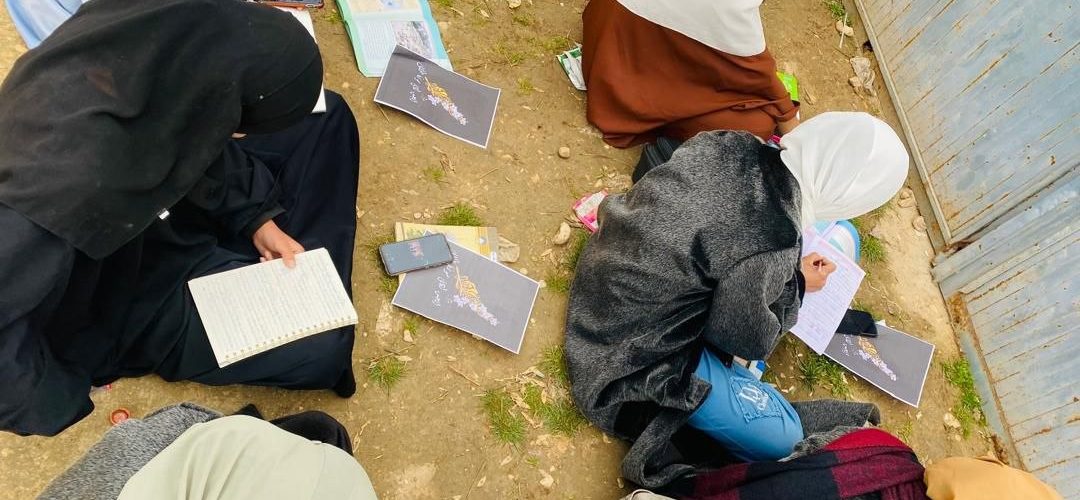
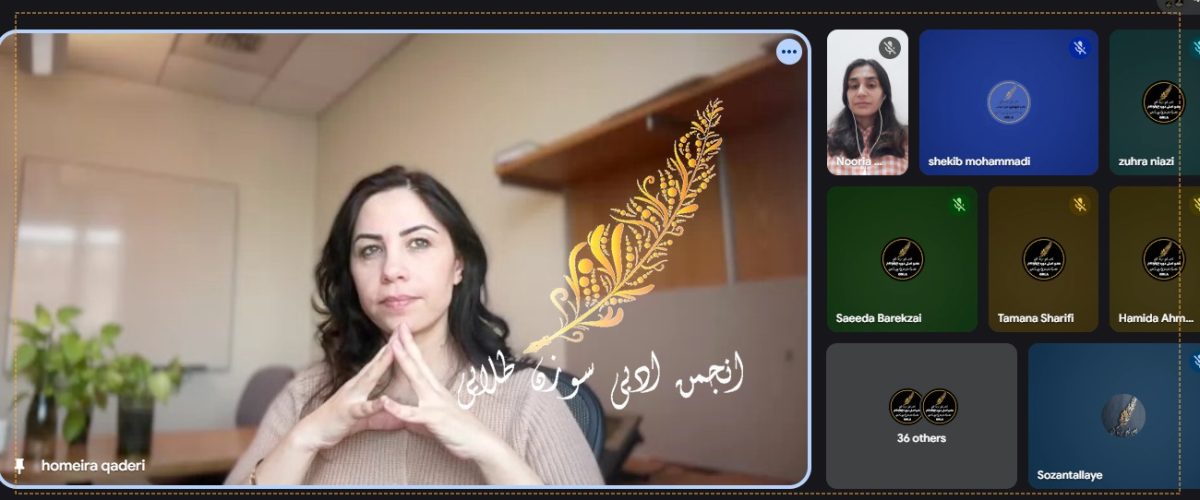
Protest of the girls of the Golden Needle Literary Association against the continued closure of schools.

The girls, members of the Golden Needle Literary Association, took part in online classes as a form of protest against restrictions on the education of women and girls in the country, while schools and universities remained closed to them.

They have called on Afghan men to stand beside them, emphasizing that such support “would turn this protest into a collective demand.”

Creative Writing Fundamentals – Session Ten

The tenth session of the creative writing fundamentals workshop, within the framework of the fourteenth course of the Golden Needle Literary Association, was held. In this session, we discussed the plot in storytelling. 🤝

Join us:

🖇 فیس‌بوک: انجمن ادبی سوزن طلایی
📌 تلگرام: https://t.me/sozantallaye
📧 ایمیل: info.sozantallaye@gmail.com

International Writing Program


The Fall of a Dream

Fall of a DreamIt was four in the afternoon. I was sitting in the hallway facing the window, preparing for an assignment I had just registered for. My mother was making ablution beside the water tap. My sister had placed a table and chair next to the Queen of the Night flower and was practicing math. She had been preparing for the university entrance exam for a year and four months. She wanted to become a doctor.My mother poured the remaining ablution water from the pitcher onto the Queen of the Night plant. She touched its leaves and said, “Grow well, my child…”I remembered three years ago when my brother planted the sapling. I had asked him, “How much did you pay?” He said, “Five hundred.” I said, “Five hundred for one flower plant?” He smiled and said, “It lasts a lifetime.”“Oh my dear… now only one of your plants is left. I wish you had never bought that motorcycle…”It was my mother speaking.This was her daily conversation with the plant and with herself: “A tree is better than a human; at least it stays.”Suddenly the door of the house shook so hard that dust scattered into the air. After hearing the news of provinces falling to the Taliban, we would jump at every sound.As soon as my mother opened the door, my uncle rushed into the yard. His face was pale like chalk.My mother said, “Is everything alright?”“The Taliban have reached near the city. There’s a chance Takhar will fall. Quickly take the essential things — we must go.”My mother looked toward the window. “What are you saying? Where can I go with two daughters?”“God is merciful. We’ll find a way.”My body went weak. My hands were trembling.My mother shouted at me and my sister in panic: “Hurry! Don’t just stand there!”I said louder, my voice shaking, “I’m not going anywhere.”My uncle said, “I won’t take you far. Just to my house. You’ll stay there until things calm down, then you can return home.”My mother stared at the Queen of the Night plant.I picked up my brother’s black backpack and put my laptop and a few books inside.I looked at my sister; she was stuffing all her exam-prep books into her backpack. Tears were knotted in her eyes. Her shoulders had dropped, her hands were limp, and she kept staring at her books. Then she looked at me. Tears fell from the corners of her eyes onto the books — like rain, drop by drop.She whispered to my mother, “How long will we stay there? I can’t study in that noisy house full of children.”“We have no choice. If fighting starts and things get worse, then what? No, we’ll manage for a few days, my dear.”I grabbed my phone and went to stand beside the Queen of the Night. I looked at the sky; no birds were flying. The clouds were moving very slowly. I thought of Suraya — my friend in Kabul. I wondered if danger had reached Kabul too. I messaged her; she wasn’t online.I opened Facebook. The news page of Tolo had written that the Taliban had attacked several districts, but the government wasn’t giving accurate information.My mother entered the room.“Your uncle went to bring the car, and you still haven’t packed,” she said to me. “What are you doing on Facebook at a time like this?”“I’m taking my books with me.”“I’m worried sick, and you’re worried about something else.”My mother had told us stories from the earlier Taliban era — how they forced girls into marriage. I stared at the photo of my father and brother on the table. My father had his arm around my brother’s shoulder. Both were laughing. On the table was a basket of artificial red roses; my brother had brought it for Mother’s Day.My mother followed my gaze. She wrapped the photo frame in a cloth and tucked it under her arm.My uncle returned with the car. My sister was clutching her backpack of books.In the yard, my mother stroked the Queen of the Night, leaned forward, kissed a couple of its leaves, and whispered something toward the sky.From somewhere nearby, the chirping of sparrows could be heard. I walked around the yard. Under the big mulberry tree, a baby sparrow had fallen to the ground. Its mother was on a branch above, chirping anxiously. I picked up the chick gently and placed it back in its nest.My mother said to the Queen of the Night, “I’ll come back, my child.
Nazifa Yazdanparast